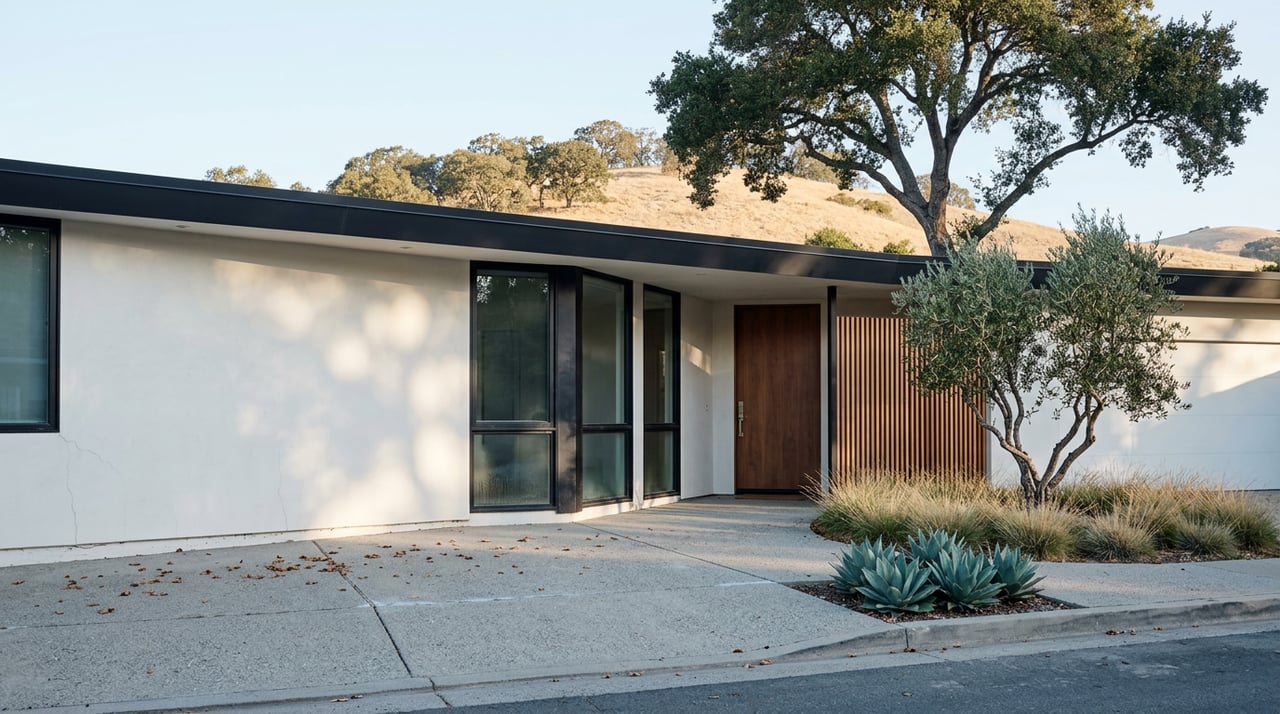
Which Saratoga are you buying?
That is not a rhetorical question. Pull up five different housing data sources this month and you will get five different answers for the same city in the same season, and at least two of them will tell you the market is moving in opposite directions at the same time. One tracker says Saratoga's median sale price rose 4.3 percent over the three months ending May 2026, landing at $4.1 million. Another says the typical home value fell 6.2 percent over the trailing twelve months, to $3.47 million. A third puts the median at $3.6 million in April 2026, down nearly 15 percent year over year. A fourth shows May 2026 closings at $3.45 million with sales volume actually up from the year before. A weekly research feed pegged the median list price at $4.85 million in early June 2026.
None of these numbers is wrong. That is the part worth sitting with before you anchor a buying or selling decision to any single headline figure.
The table that should make you stop trusting the headline number
| Source | Time window | What it reported | Direction |
|---|---|---|---|
| Redfin | 3 months ending May 2026 | $4.1M median sale price | Up 4.3% YoY |
| Zillow Home Value Index | 12 months ending June 2026 | $3.47M typical home value | Down 6.2% YoY |
| A spring market analysis | April 2026 | $3.6M median | Down 14.9% YoY |
| A national sales tracker | May 2026 | $3.45M median, 100 homes sold | Up from 93 sold the prior May |
| Altos Research weekly feed | Week of June 3, 2026 | $4.85M median list price | Rising monthly |
Five snapshots, taken within roughly ninety days of each other, describing the same city. If you were comparing Saratoga to Los Gatos or Monte Sereno on a spreadsheet this summer, you could have picked whichever number supported the conclusion you already wanted. By the time you read this, every one of these five figures will already have moved again. That is not a reason to ignore them. It is the point: the instability is structural, not a passing blip from one strange month.
Why the same spring produces five different numbers
The honest answer is not that anyone is lying. It is that Saratoga does not sell enough houses in any given month for a median to behave the way a median behaves in a larger market.
Different sources counted anywhere from 27 homes sold in March 2026 to around 100 sold in May 2026, against an active inventory that has hovered between roughly 64 and 100 listings at any given time this year. Compare that to Santa Clara County as a whole, which typically carries more than 5,200 active listings. When your entire dataset for a month is two or three dozen closed sales, a handful of estate-level closings versus a handful of smaller updated homes can swing the median by hundreds of thousands of dollars without a single comparable property actually changing in value.
Layer on top of that the fact that these sources are not all measuring the same thing. Some report median sale price on closed transactions. Others report a modeled estimate of typical value across the entire existing housing stock, whether or not those homes sold. Others report list price rather than sale price, which matters in a market where a meaningful share of sales close under asking. A three-month trailing window and a single-month snapshot will tell two different stories even when nothing in the underlying market has changed.
There is also a structural reason Saratoga's sales volume stays this thin. California's Proposition 13 caps the assessed value used for property tax at roughly one percent, reassessed only when a property changes hands. In a city where many owners have held for decades, that creates a real incentive to stay put rather than sell and reset a tax basis built on a home purchased at a fraction of today's price. Fewer long-time owners listing means fewer transactions each month, which means each individual closing carries more statistical weight on the median than it would in a market that turns over faster.
The number that moves in only one direction
If the median is this noisy, what should you actually track? Price per square foot, because it strips out the size-mix problem that makes the median swing.
Redfin's three-month window ending May 2026 showed price per square foot in Saratoga at roughly $1,500, up 7.4 percent year over year, even in the same report where the median sale price direction disagreed with other sources. Multi-year trend data on Saratoga pricing shows a generally rising line in price per square foot since the 2022 peak and reset, which is a more useful signal than a headline median that can be dragged around by whether three $6 million estates or three $2.5 million updated ranch homes happened to close in a given quarter.
This is the number to bring into a conversation with a lender or an agent when you are trying to figure out whether a specific listing is priced fairly. It is not the number that shows up in a headline, which is exactly why it gets ignored.
Where the mix shift actually happens
Saratoga is not one market. Break the city into its recognized sub-areas and the median divergence stops looking like noise and starts looking like a map.
Northwestern Saratoga, the area associated with the Blue Hills and Argonaut neighborhoods, held a median near $4.1 million this spring and was down less than one percent year over year, the most stable segment in the city. Southeastern Saratoga told a different story entirely, with a median around $3.5 million and a year-over-year decline north of 25 percent. Saratoga Woods sat in between, around $3.2 million and down roughly 14 percent.
That spread does not mean homes in southeastern Saratoga lost a quarter of their value in twelve months. It more likely means fewer large estate sales closed there in this particular window compared to a year earlier, pulling the local median down even if comparable homes are worth about what they were worth before. This is the same mix-shift mechanism at the citywide level, just visible at a finer grain. A buyer comparing "Saratoga" to "Los Gatos" as if each were a single number is comparing two collections of very different sub-markets dressed up as one line item.
The map problem: school boundaries that don't follow the road
Saratoga's internal geography creates a second layer of noise that has nothing to do with sales volume. School attendance boundaries for Blue Hills, Argonaut, and Saratoga Elementary do not always track intuitive geography, and buyers who assume they do can misjudge value by a meaningful margin, with one street sometimes marking the difference between two different elementary assignments and a price gap reported in the range of $200,000 on otherwise comparable homes.
Neighborhood identity compounds the effect. Pierce Road carries a land-value premium tied to lot size and privacy. The area sometimes called the Golden Triangle is prized for walkability and architectural character rather than acreage. Saratoga Village offers smaller lots with immediate access to downtown. None of these are interchangeable, and a median price built from a blend of all of them tells you less than a comp pulled from the specific pocket you are actually considering.
One more wrinkle worth knowing before you build a search strategy around MLS alone: a meaningful share of Saratoga transactions above $4 million reportedly happen off-market before they ever reach the public listing feed. If your search is built entirely on portal alerts, you may be missing the inventory that matters most at the top of the price range.
What this means if you are comparing Saratoga to Los Gatos or Monte Sereno
If you are cross-shopping Saratoga against neighboring towns this year, the practical move is to stop anchoring on the citywide median entirely. Ask for closed comps within the specific sub-neighborhood you are targeting, weighted by price per square foot rather than raw sale price, and ask how many comparable sales actually back that number up. A median built from four transactions carries a different level of confidence than one built from forty.
Financing planning matters here too. A large share of Saratoga homes sell above conventional conforming loan limits, which means jumbo underwriting, larger down payments, and cash reserves should be part of your pre-approval conversation well before you are competing for a specific address. And if you are buying with a long time horizon, remember that your future property tax basis resets to your purchase price under Proposition 13, which is worth modeling into your total cost of ownership rather than treating as an afterthought.
Frequently asked questions
Is Saratoga's median home price actually falling in 2026? Depending on the source and time window, the answer is both yes and no. Some 2026 windows show declines of 6 to 15 percent year over year while others show gains near 4 percent over the same general period. The honest answer is that the median is too sensitive to which handful of homes closed in a given window to answer that question on its own. Price per square foot has trended upward across most of the sources that report it.
Why do different housing sites disagree so much on the same city? They are measuring different things. Some report closed sale prices, others model a value across the entire housing stock whether or not it sold, and some report list prices rather than sale prices. Combine that with a market that only sells a few dozen homes a month and small differences in methodology produce large differences in the headline number.
How many homes actually sell in Saratoga in a typical month? Recent months have ranged from around 27 to roughly 100 closed sales, against active inventory that has generally sat between 64 and 100 listings. That is a small enough sample that a few high-value estate closings can move the median significantly without reflecting a broader shift in value.
Should I wait for the median to drop further before buying? A declining median in a thin market does not reliably predict what a specific comparable home will do next. It often reflects which homes happened to sell, not a citywide repricing. A more useful exercise is pulling recent closed comps in your target sub-neighborhood and tracking price per square foot rather than waiting on a headline number to move in your favor.
Saratoga rewards buyers and sellers who read past the headline. If you are trying to figure out what a specific address in Blue Hills, Pierce Road, or the Golden Triangle is actually worth in today's market, or how to plan financing around a home that may exceed conforming loan limits, NAVJIT SANGHA brings an investor's read on the data and a clear, jargon-free walk through what the numbers actually mean for your situation. Request your free home valuation and get a number built from real comps, not a citywide average.